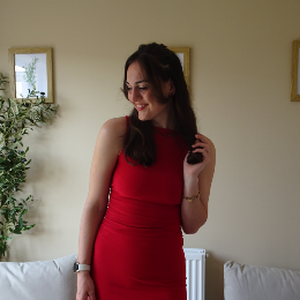
Hi, I'm Bec.

Welcome to my corner of the internet

My Work

ARUK24 & WiNUK: Our experience

Alzheimer’s Research UK (ARUK) Conference is the largest annual dementia research conference in the UK, held this year in Liverpool. Women in Neuroscience UK were invited as an exhibitor and also asked to host a lunchtime workshop to discuss the path to equity - major visibility for our cause! Rebecca Parker discusses WiNUK's experience here.After months of prepping and weeks of stressing (and also a late-night panic session reviewing the presentation in a hotel lobby), it is safe to say that a...
New neural implant translates brainwaves into words for natural communication

Imagine a future in which individuals can regain the ability to communicate almost naturally through a brain-computer interface. In a new development, a team of Duke University researchers has unveiled a cutting-edge speech prosthetic that holds promise for individuals suffering with speech-impairing neurological disorders.The prosthetic features 256 brain sensors on a small, flexible piece of medical grade plastic, and aims to convert neural signals from the speech motor cortex into realistic s...

Exploring Deep Brain Stimulation: Applications, Challenges, and Alternatives

As the world's population grows at an unprecedented rate, we must cope with a significant increase in people suffering with various neurological disorders. This brings with it a range of challenges: from personal well-being to social dynamics, healthcare, and economic systems. Among the issues that arise, there is a substantial increase in mental health disorders, which can significantly impact an individual’s quality of life. One potential avenue for treating various neurological and neuropsyc...

Combining AI and neuroscience to detect and predict neurological disorders

There is a strong relationship between Artificial Intelligence (AI) and neuroscience: Both disciplines are concerned with the study of the brain and nervous system, and both aim to understand how these systems work. Neuroscience studies the biological structure and function of the nervous system, including the brain, while AI is a field of computer science focused on creating intelligent machines that perform tasks mimicking human intelligence, such as problem solving and language recognition. T...

New approval for Alzheimer’s drug - but what does this mean for the future?

In an 18 – month clinical trial with 1795 participants with mild dementia caused by AD, half of the patients received 10mg/kg intravenous lecanemab every two weeks, whilst the other 50% received a placebo. The main findings of the clinical trial can be summarised as an average of 27% slowing of cognitive decline across the participants over 8 months. These results demonstrate that lecanemab achieved its main goal of slowing cognitive decline, showing for the first time that amyloid-beta removal...

Can disruptions to our circadian rhythms be contributing to mental health disorders?

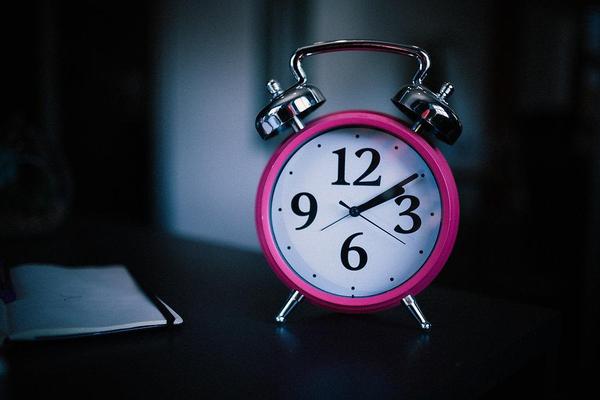
Circadian rhythms are dynamic patterns that regulate internal processes in a 24-hour (solar) day. They function in a diurnal pattern in response to light input reaching the suprachiasmatic nucleus, a tiny region in the brain that acts as a master clock and central pacemaker. Among other functions, circadian rhythms regulate the sleep-wake cycle and hormonal release. Think about how you often feel a dip around midday (or maybe 3pm) - that’s caused by the fluctuating patterns in your circadian cyc...

A little bit about me.

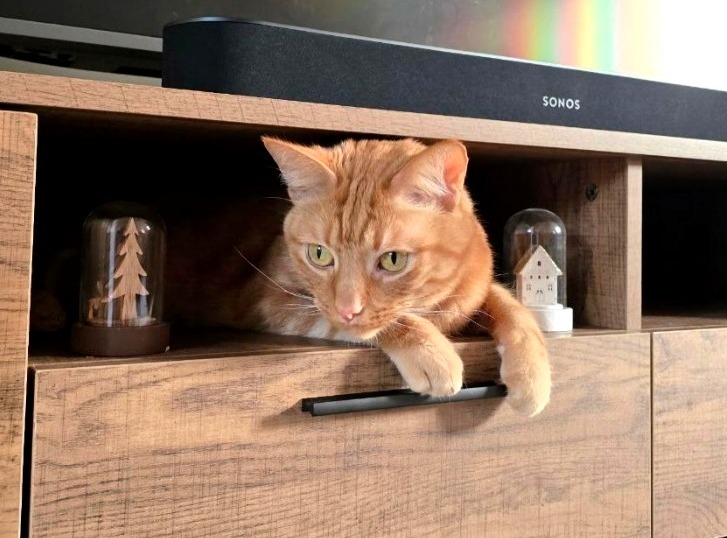
Please say hi to my derpy orange cat Meeko as well. 

I'm a neuroscience graduate who writes about science and spent a few years running the operations of a manufacturing business in between.

I studied Neuroscience at Cardiff University, spending my dissertation working with EEG and MRI data on cortical mapping. Alongside that, I've written for Women in Neuroscience UK for a few years, translating research on everything from circadian rhythms to consciousness into something a general reader can actually enjoy.

Before that, I worked as a camp instructor and after-school science host for Mad Science, running clubs and events for kids. It's where I first properly learned how to make science land for an audience that has zero patience for jargon, a skill that's turned out to be useful for every audience since. 

More recently, I've spent two years as the operations lead for a fabrication business, estimating jobs, negotiating with suppliers, and managing a workshop under real deadline pressure. It wasn't part of the plan, but it taught me a lot about staying clear-headed and decisive when things don't go smoothly.

I'm currently building a career in science communication and technical writing, bringing together the research background, the writing, and the operational discipline, with a novel-in-progress quietly taking shape in the background.

Message successfully sent!

This site is protected by reCAPTCHA and the Google Privacy Policy and Terms of Service apply.